


Page 42 - Demo
P. 42
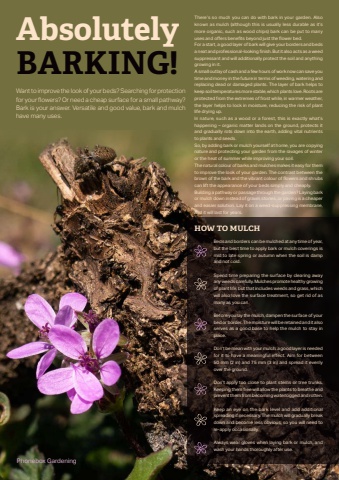
42 Phonebox Magazine | July 2025Want to improve the look of your beds? Searching for protection for your fl owers? Or need a cheap surface for a small pathway? Bark is your answer. Versatile and good value, bark and mulch have many uses.AbsolutelyBARKING!There%u2019s so much you can do with bark in your garden. Also known as mulch (although this is usually less durable as it%u2019s more organic, such as wood chips) bark can be put to many uses and off ers benefi ts beyond just the fl ower bed.For a start, a good layer of bark will give your borders and beds a neat and professional-looking fi nish. But it also acts as a weed suppressant and will additionally protect the soil and anything growing in it.A small outlay of cash and a few hours of work now can save you time and money in the future in terms of weeding, watering and replacing dead or damaged plants. The layer of bark helps to keep soil temperatures more stable, which plants love. Roots are protected from the extremes of frost while, in warmer weather, the layer helps to lock in moisture, reducing the risk of plant life drying up.In nature, such as a wood or a forest, this is exactly what%u2019s happening %u2013 organic matter lands on the ground, protects it and gradually rots down into the earth, adding vital nutrients to plants and seeds. So, by adding bark or mulch yourself at home, you are copying nature and protecting your garden from the ravages of winter or the heat of summer while improving your soil.The natural colour of barks and mulches makes it easy for them to improve the look of your garden. The contrast between the brown of the bark and the vibrant colour of fl owers and shrubs can lift the appearance of your beds simply and cheaply.Building a pathway or passage through the garden? Laying bark or mulch down instead of gravel, stones, or paving is a cheaper and easier solution. Lay it on a weed-suppressing membrane, and it will last for years.HOW TO MULCHBeds and borders can be mulched at any time of year, but the best time to apply bark or mulch coverings is mid to late spring or autumn when the soil is damp and not cold.Spend time preparing the surface by clearing away any weeds carefully. Mulches promote healthy growing of plant life, but that includes weeds and grass, which will also love the surface treatment, so get rid of as many as you can.Before you lay the mulch, dampen the surface of your bed or border. The moisture will be retained and it also serves as a good base to help the mulch to stay in place.Don%u2019t be mean with your mulch: a good layer is needed for it to have a meaningful eff ect. Aim for between 50 mm (2 in) and 75 mm (3 in) and spread it evenly over the ground.Don%u2019t apply too close to plant stems or tree trunks. Keeping them free will allow the plants to breathe and prevent them from becoming waterlogged and rotten.Keep an eye on the bark level and add additional spreading if necessary. The mulch will gradually break down and become less obvious, so you will need to re-apply occasionally. Always wear gloves when laying bark or mulch, and wash your hands thoroughly after use.Phonebox Gardening


