


Page 28 - Phonebox Magazine June 2009
P. 28
WARDING OF OLNEY OUT ON PUBLIC CONSULTATION
Milton Keynes Council is reviewing the election arrangements for all Parishes across the Borough. In Olney, it proposes to split the town into three areas or wards that will be known as Olney West, Central and East.
At present everyone on the Electoral Roll has the right to vote for all members of Olney Town Council, and all members of the Council are happy to represent anybody in the town irrespective of where they live.
If the town is split into three wards, then you as electors, instead of being able to vote for fifteen members as you are at present, would be voting for just five. During the past few months the Town Council has been defending the right to continue to govern ourselves as we have done for over a century. However, Milton Keynes Council thinks differently. In the long term this proposal would have a divisive effect on the community of Olney.
Olney is a town with a rich and diverse history stretching back to 876 AD. The Town Council has been in existence for more than 100 years, during which time the various members have come to appreciate how the local governance of Olney should be carried out. The town has a high level of community cohesion and, because of its history, a true sense of place.
Such a suggestion would seem unacceptable to the majority of Olney residents who are proud of their town, its heritage, and what can only be described as “the Olney Way of Life.”
Olney Town Council is totally opposed to the warding of Olney, and from a small canvass that has been carried out we have formed the impression that you, as residents of Olney, are of a similar opinion.
Shortly you will receive details of how to respond to the consultation, which will run until the end of July 2009. It is not for us to influence your decision, but we have stated what we consider to be best for the town. We hope you will agree with us and will be able to give us your support.
As Happy as Bees in Clover
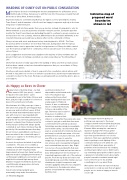
Indicative map of proposed ward
boundaries shown in red
Agreat stack of burning straw – we had the same in 2001 (see photo) – carried me back to the years when I spent innumerable hours in the fields of Essex and Kent, and yes I kept a number of colonies of bees in those fields and orchards.
Now that was all of fifty years ago, it was a time when men and bees were happier than we are now and not without cause. At that time the fields that rendered straw ran rich also with clover so I was rewarded with copious supplies of excellent clover honey beside the fee income from parking hives in growers’ orchards. Even the bees knew the honey was good, they were always quietly contented at such times; mind you they did get tetchy if the weather became thundery. Clover honey is splendid but now the poor bees are asked to be content with rape; it comes as no surprise to me if they are now falling to scourges new.
So much for my bees but what of my fellow countrymen. This was not so wealthy a country as it had been at the previous turn of century but we were enjoying steady improvements at every turn. Great sacrifices had been made in salvaging the freedoms of our European neighbours; we had won and might hold our heads high among them. Charles De Gaulle resented this but he was constitutionally unhappy unless he had a chip on his shoulder.
Our at home living standards were measurably rising and a fine education
system provided a most
dependable and informed work
force. This situation was
enhanced by the excellent
trades training which was such
a large aspect of National
Service. It was a combination
which contributed immensely
to the social mobility of the
age. There was vast scope for
the person of ambition or
invention to advance their
status in society while the people who were content to just get on with their lives were content indeed. Household goods and furnishings were becoming more available and in wider variety. I would venture (fifty years is a long stretch for memory) that each and every household was aware of its own betterment from one year to the next, there was little or no cause to envy the neighbours. People then were less greedy, less envious and consequently far happier and contented than we are to-day. Right now we’ve a thousand benefits that were then undreamed of and we have become so busy demanding more for less that we’ve squeezed happiness right out of the national psyche. From the top down we’ve become downright greedy, even little children are now shrieking as of right for expensive and needless gadgetry with personal computers and television in the bedrooms where parents should better be sitting to read the bedtime story.
My newspaper has been giving our politicians an exposure to the moral compass wherein they’ve failed disastrously. In the same week we’ve seen a photo of Clement Attlee mowing his own lawn in Stanmore during 1949. He was prime minister at the time and will certainly not have even put the three-in-one oil onto expenses. Here was a gentleman using the train for getting to work fighting off the communist intrusion even within his own cabinet. Certainly there were plenty of problems in those times but evil cheating and fraud were rather scarce. Well I had to say something about politics didn’t I and it is a pleasure to remember even Labour party people I was able to admire; beside right now someone’s got to try and find something nice to say about them.
We had less then than we have now but at every level in society we were then a happier people, we too were as happy as bees in clover. GB
28 Phonebox Magazine


