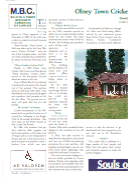
M.B.C. Olney Town CrickeDavid Cricket CBy the middle of2004 and through the club's own nd-raising e orts, assisted by two substantial grants from Olney Town Council and the Milton Keynes Community Foundation, we had raised su icient BUILDING & TIMBER MERCHANTS GARDEN and T H E provided, courtesy of Alfie Harrison, the local baker. first DIY SUPPLIES reference ---------- to cricket being played in Olney appeared in the Almanack of 1883. In the early days cricket was played at several locations This pavilion was still far too small so, by 1960, someone spotted an advert for an unused chicken broiler house for sale locally. The main attractionwasitssize,some50feetby 40 feet. The building was purchased and a military style operation to dismantle and re erect it at the ground was masterminded by Alfie Harrison. in the town. These included "Hatch Green" - a field now taken up by the Carey Way estate, "Cherry Orchard" - now the site of the Conygere estate - and then on a field in Yardley Road, believed to be where the Moores Hill estate now This building Chicken Broiler House lS. "Olney celsior Cricket Club" Finally, in 1898 Olney Town Cricket Club (or as it was then known "Olney Excelsior Cricket Club") moved to the Recreation Ground proved adequate for many years with several mmor improvements being added at intervals. where we remain to this day. Prior to World War II, the club had By the early a small pavilion situated at the church end of the ground. This pavilion served us well until 1 939, when it was demolished and the ground ploughed up to produce food, potatoes etc for the war effort. The ground was re sown with grass after the war and standards expected levelled. by both club Mrs Looms' Tea Rooms members and Cricket recommenced in the 1 947 visiting teams. season with no pavilion but the use of Floods a small hut belonging to the Rugby Conclusive Club for kit storage and shelter. Teas evidence of the end were taken on the Market Square at of one era came Mrs Looms' Tea Rooms. with the floods of October 2000 which wreaked further damage to the condition of our old pavilion. money to take the decision to go ahead and build the new pavilion you can now see at the Recreation Ground. By 1 948, club members had their collective skills together and built a new pavilion at the railway end of the ground in a very similar style to the pre-war one. A few seasons later a small extension was added to create a kitchen from which teas were AD VALORIM CHARTERED CERTIFIED ACCOUNTANTS PAGE 32 THE PHONEBOX teas, showers and a post-match beer. put In 2002, the club decided to demolish the old pavilion and, armed with just over £7,000 and planning permission r a new pavilion, club members crossed fingers, toes and any other loose bodily appendage they could find and hoped for the best. 1990s it became increasingly obvious that an ex-chicken hut could not provide the Two years were spent lodging in a site hut kindly provided by Francis Jackson Homes and squatting with our friends at the Football Club who kindly provided accommodation for Souls oThe cricket club is indebted to a huge number of local people and rms who have given time, money and technical expertise to make the pavilion happen. Indebted