


Page 67 - Phonebox Magazine February 2008
P. 67
Phonebox Magazine 67
only reached by boat. The days were spent chilling at the beaches, two of which were only
accessible by walking along wooden staircases around the cliffs and the nights were spent strolling the island and drinking in the Koala bar, a lively bar with free pool and good happy hour deals. Unfortunately this was the bar below our room, so the nights spent not drinking were also spent not sleeping too soundly either!
Back in Hanoi we organised a trip to Sapa, a beautiful village that lies on the Hoang Lien Son mountain range near the Chinese border in NW Vietnam. Keen to get back down south, we were not sure at first whether to go to Sapa, also as it was quite expensive to get there but this soon turned out to be the highlight of Vietnam. Our journey started with an overnight sleeper train, in a four bunk cabin shared with a Vietnamese businessman and a mother and child. Luckily the kid was well behaved! Dodgy piped music awoke us about half an our before the train arrived at 6am in Sapa, which wasn’t the best wake up call. We then caught our bus through the mountain ranges towards Sapa - complete with dodgy Vietnamese pop music being played a bit too loudly!
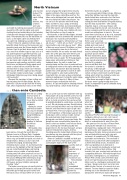
and are amongst the largest ethnic minority people in Vietnam. There are two other main tribes in this region called Dzao and Tay. The tribes can be distinguished from each other by the very distinctive clothes they all wear. You can see us in the pictures with the H’mong tribes and there is also a photo of the Dzao tribes with their red hats and shaved eyebrows. All the tribe women carry their babies on their backs in a sort of sling, even children will carry their little brother or sister if needs be.
On the walks to the hill tribe villages, terraced rice paddies and mist dominated the spectacular landscape. You would also be followed by women and young girls, with questions of “how old are you?”, “where are you from?” and “how many brothers and sisters do you have?”. Many of them are one of around 10 children, as there is no contraception here due to the lack of medical facilities. On our walks we made friends with a few of the girls (they were there to sell you stuff) and learnt a lot about the hill tribes from them and our guide. The H’mong peoples indigo robes with patterned stitching is their trademark dress, the cloth is made from spinning hemp and the colour is produced from an indigo plant native to this region whereby the green leaves wilt and turn blue and made into powder, this is then placed in a barrel of water and the powder is only made soluble when mixed with lime, rice wine or boys urine before heating to boiling point, turning the water indigo before the cloth is dyed in it. Many of these womens fingers are dyed blue from this process. In Sapa we bought an amazing stitched rug, hand-made by a whole family that took
the sun on the roof (we were told there were too many people sat up top and that some of us had to get down, but when no-one moved the guy left us to it and we came to the conclusion that he probably decided he could always say he told us so!). We sat playing rummey, literally baking in the scorching heat which was way hotter than Vietnam, until we arrived at a port to get a bus to Phnom Penh. The hour long bus journey was our first experience of the bumpy roads we had heard about, with no tarmac in sight, instead the roads had been made from persistent driving and consisted of massive pot holes. We thought we were uncomfortable (especially as Emma’s chair was broken!) until we saw trucks, carts, anything and everything loaded with people which is the real local transport, one guy stated it reminded him of parts of Africa. Travelling along the Indian/Hindu influence from years before was also apparent with the style of temples and calligraphic writing.
Aware of Cambodia’s troubled and dark past and the vast levels of high poverty, along with some people’s hype over the state of the
country, both of us were apprehensive of how our experience of this country would turn out.
The estimated four to six million unexploded mines (meaning under no circumstances
them three months to complete.
You see some great things in Sapa, little boys
riding their buffalos home up the steep hills, hand-stiched items and works of art that have taken days through to months by the person selling you them and families living and working from the land around them - with nothing imported. Sapa is a very poor region, with tourism boosting the area yet a lot of profits go to tour companies and the locals money is now made from selling items to tourists. This can cause them to hassle you to buy a lot, especially the young girls who you wish were at school. Unfortunately most of them are illiterate as there is only one school
(which wasn’t open when we
walked past) and most of
them don’t go as they will
make more money selling to
tourists (although they didn’t
go before tourism either).
We have mixed views about
Sapa, with Emma feeling that
it was a great experience but
also that it is ruined by
tourism and Mark feels that
the tourism is a burden to
the privacy of these people
and a threat to the roots and core values of their culture, yet does create more income through selling, which infact has started to create new opportunities for the tribal people.
After Hanoi we caught a flight to Saigon as the buses weren’t going through due to the floods, in preparation to get to Cambodia along the Mekong Delta.
wandering
off the
beaten
track, even
when the
bus stops
at the road-
side as a
toilet stop!),
and the
atrocities of Pol Pot still haunting the people of Cambodia, did worry us a bit – but it wasn’t going to deter us from experiencing a country which is underestimated in what it can offer.
We spent our first six days in Phnom Penh, staying by the lakeside in an area that has developed into a backpacker haven. The back of the guesthouses were wooden and on stilts backing over the lake, facing an amazing sunset view and had chillout areas with a bar and restaurant, all complete with TV, DVD players, pool tables and hammocks. The area made it really easy to socialise with other backpackers as there were plenty of bars, restaurants and other cool guesthouses to kick back in.
In our research into Cambodia, we had read of foods consisting of duck embryo, fried tarantula, fish eyes, monkey brain and other not so appealing delicacies. We really thought food would be a challenge but, to our amazement, Phnom Pehn served some of the finest food we’ve ever had the pleasure of eating. From khmer curry to a Cambodian and western take on tapas, ‘bangers and mash’ and at last nice edible chicken, the pair of us were truly in our element. The area made for some fine nights, drinking out on the lakeside with other backpackers with the only downside being the
We spent the mornings in Sapa visiting and learning about the hill tribe villages. Our tour guide was a 20 year old girl from the H’mong tribe, which migrated from China in the 1800s
. . . then onto Cambodia
With the rain cutting short our plans in Vietnam, we decided it was time to venture on towards Cambodia.
Opting for a more adventurous border crossing, we decided that crossing by boat along the Mekong Delta would be a great way to say goodbye to Vietnam and hello to Cambodia.
We booked a two- day tour combining
boat and bus, through the South West of Vietnam to arrive in Phnom Penh, Cambodia. The bus journey to the first boat was hilarious, with a crazy yet lovable tour guide, not short on melodramatics, telling us a short story that involved him singing and dancing whilst mimicking horse sounds. Us and everyone else said he was the highlight of the trip! Along the way we visited floating villages and floating fisheries using a number of nostalgic boats, chatting away with other people on our tour. In the blazing heat we continued our journey along the colossal Mekong Delta watching locals go about their everyday life, seeing the riverside stilt houses and local children waving and shouting “hello!”
The border crossing was not exactly what we expected, we jumped off the boat to walk over the border, go through passport control and then back onto a new boat where we all sat in
North Vietnam


